 2023-25
Simplifying the way people control their algorithm
A core tenent of any social media business model is ensuring people see high-quality content they enjoy while avoiding low-quality, unwanted or distressing content.
This is achieved through a combination of algorithmic content recommendations and user-controlled settings which augment or adjust them.
In 2023 I led an effort to simplify and scale the suite of controls people use to control their content in Feed, Reels, Marketplace and Search.
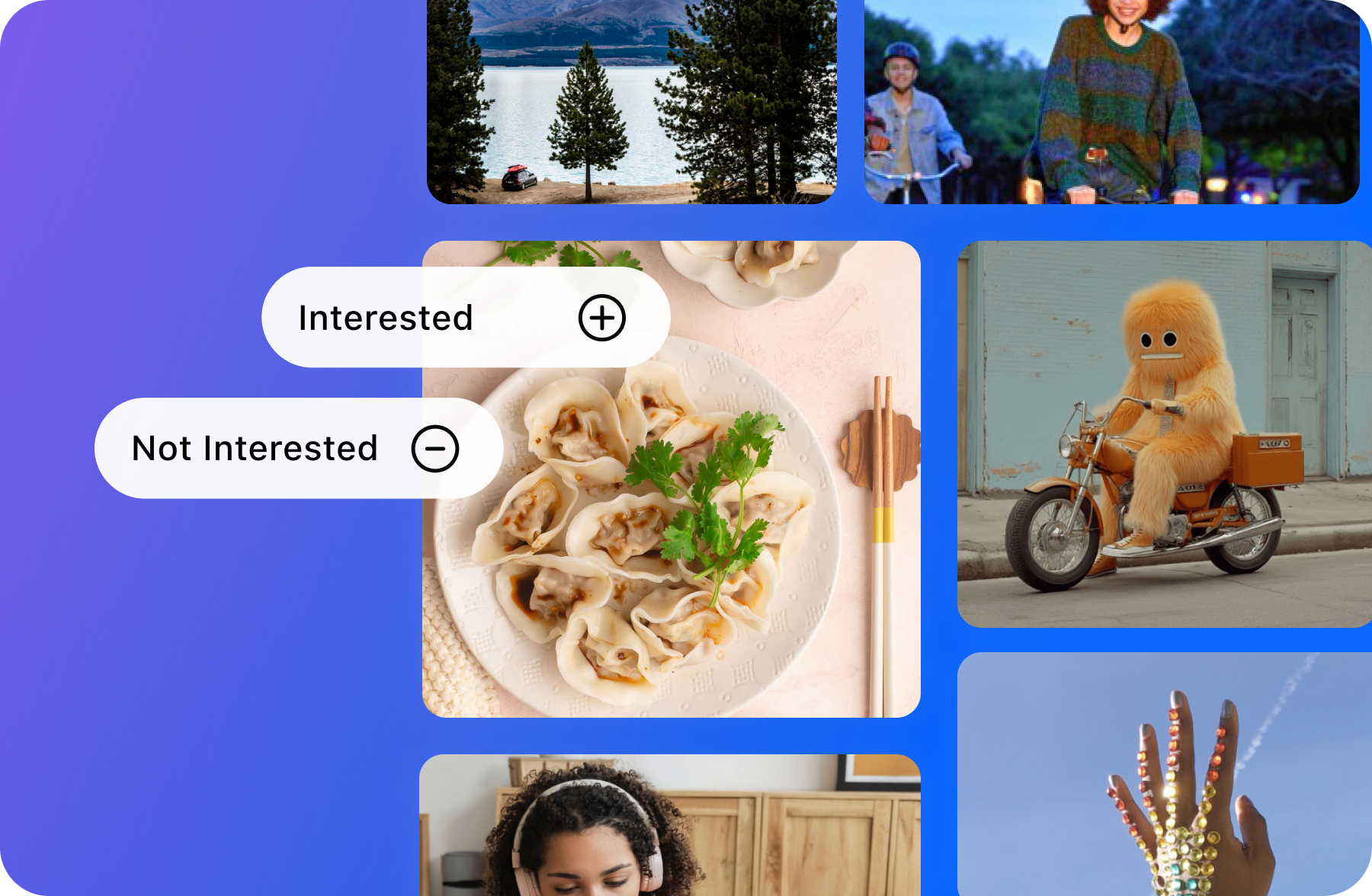

CONFIDENTIALITY NOTICE: My work at Meta focused on highly sensitive trust and safety initiatives which are subject to strict NDAs. Did I read them? No. Am I scared of them? Yes.
As such much of my work including, iterative design explorations, specific workflows and non-published metric impacts cannot be shared publicly.
The challenge
People want the ability to directly control the content they see and don’t see on Facebook, and want to feel those selections are respected by the platform.
The suite of levers Facebook used to give people this control had grown exponentially over a period of several years, and was largely unowned as a whole.
This allowed system-level problems to proliferate across Facebook leading to an excess number of duplicative features with incomplete or unclear impacts, all of which culminated in user confusion and dissatisfaction with their ability to influence what they do and do not see on Facebook.
My Role
I joined the Facebook Controls team with a mandate to help the team scale the newly-launched Show More / Show Less control beyond home feed. During the course of this effort we encountered significant headwinds in the form of system-level problems which culminated in pivoting to holistically redesigning how people give feedback on the content they see, and other key aspects of their experience on Facebook.
Contributions
-
 Identified system-level gaps and blockers to the success of multiple features owned by the immediate product team and successfully aligned leadership on the need, and resource allocation to solve them.
-
Established evaluation criteria based on user data and historic research findings and audited over 200 existing control experiences across Facebook.
-
Using the audit findings I co-led the creation of a standardization and consolidation framework to simplify experiences, align them with people’s expectations and needs and fill critical coverage gaps.
-
Co-led creation of a north star strategy for algorithmic, privacy and experience controls across Facebook, successfully influencing leadership and pivoting multiple teams across Feed, Reels and Trust and Safety to prioritize controls work across multiple quarters.
-
Established controls as a net-new pillar within Facebook’s design system, and developed governance criteria and ceremonies to uphold cohesion across the space moving forward.
What we Shipped
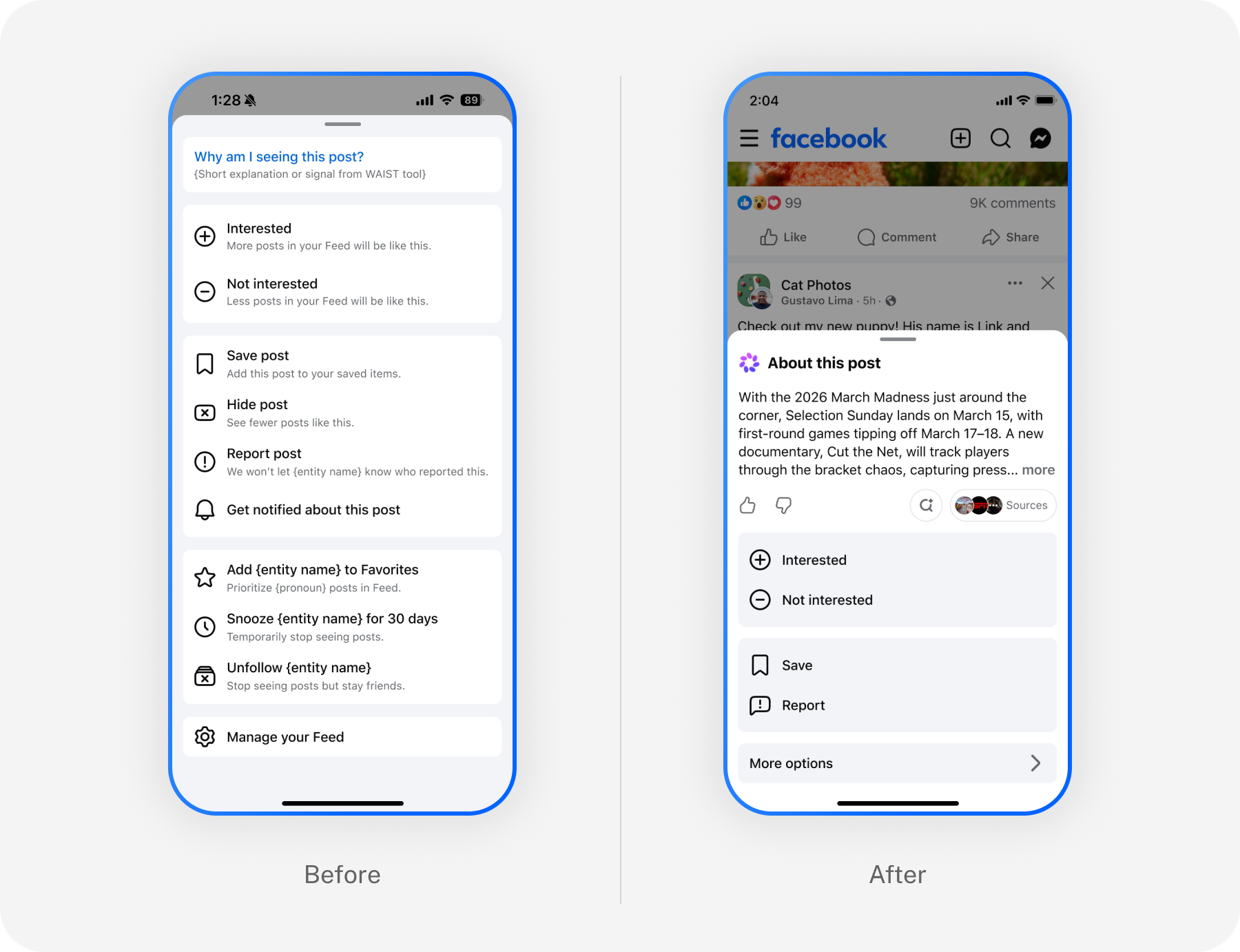
Simplified post-level overflow menu
We drastically simplified the post overflow menu around a small concise set of top-level controls making it easier for people to find the control that would get them the outcome they wanted.
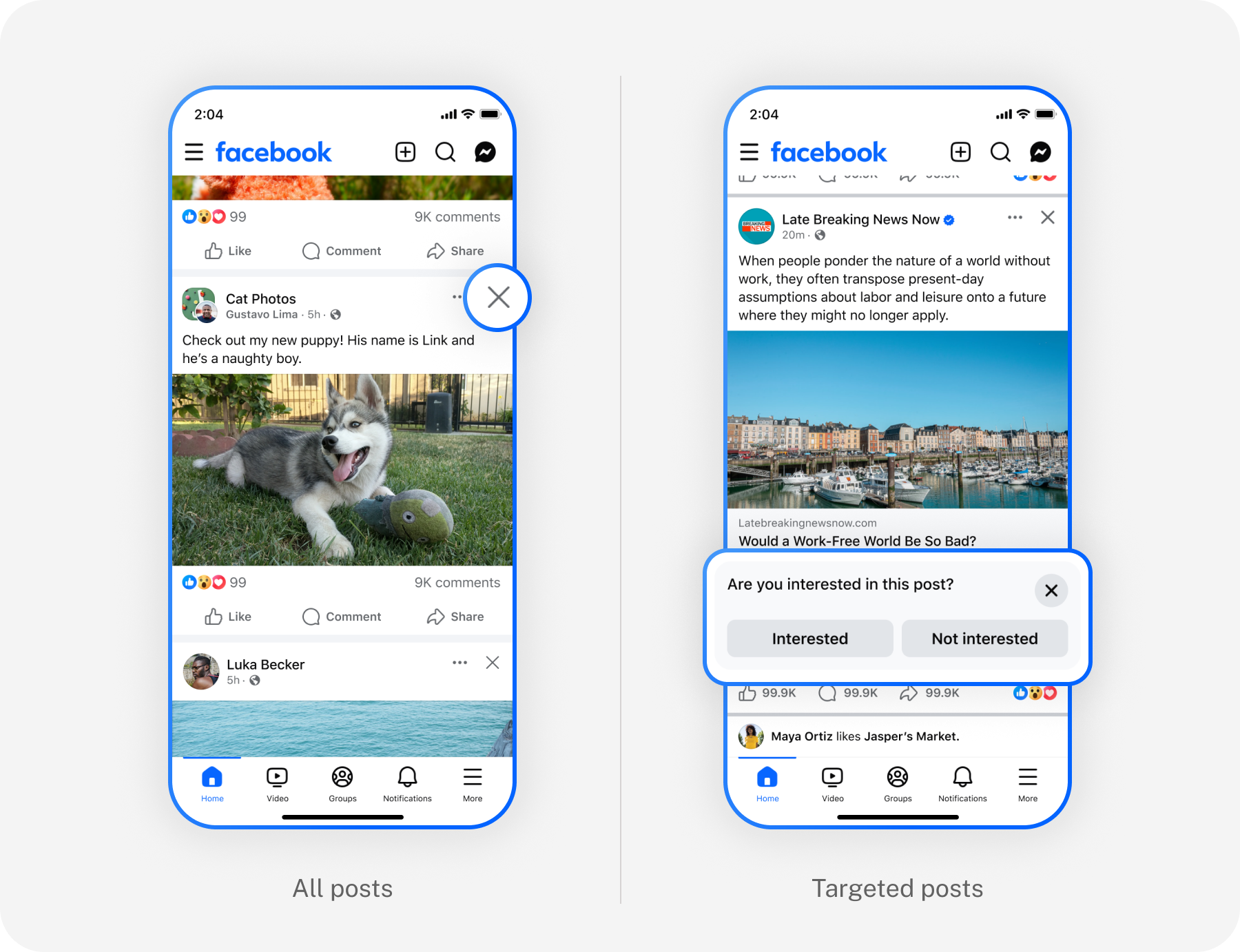
Established feed-level negative feedback mechanisms
Historically negative feedback actions were hidden inside a menu, where as myriad opportunities to give positive feedback existed at the top-level. To create more equal opportunity for people to let us know they didn’t like something in their feed we worked with our design systems team to canonize two patterns for collecting negative feedback at the feed-level without the need to open a menu.
The first could be used generically on all posts. The other could be deployed when certain targeting criteria are met indicating we may need more signal to improve a user's feed.
Negative feedback refinement pattern
To account for fewer hyper-focused controls we partnered with our design system team to build a single unified pattern to give people a light-touch way to refine negative feedback on content.
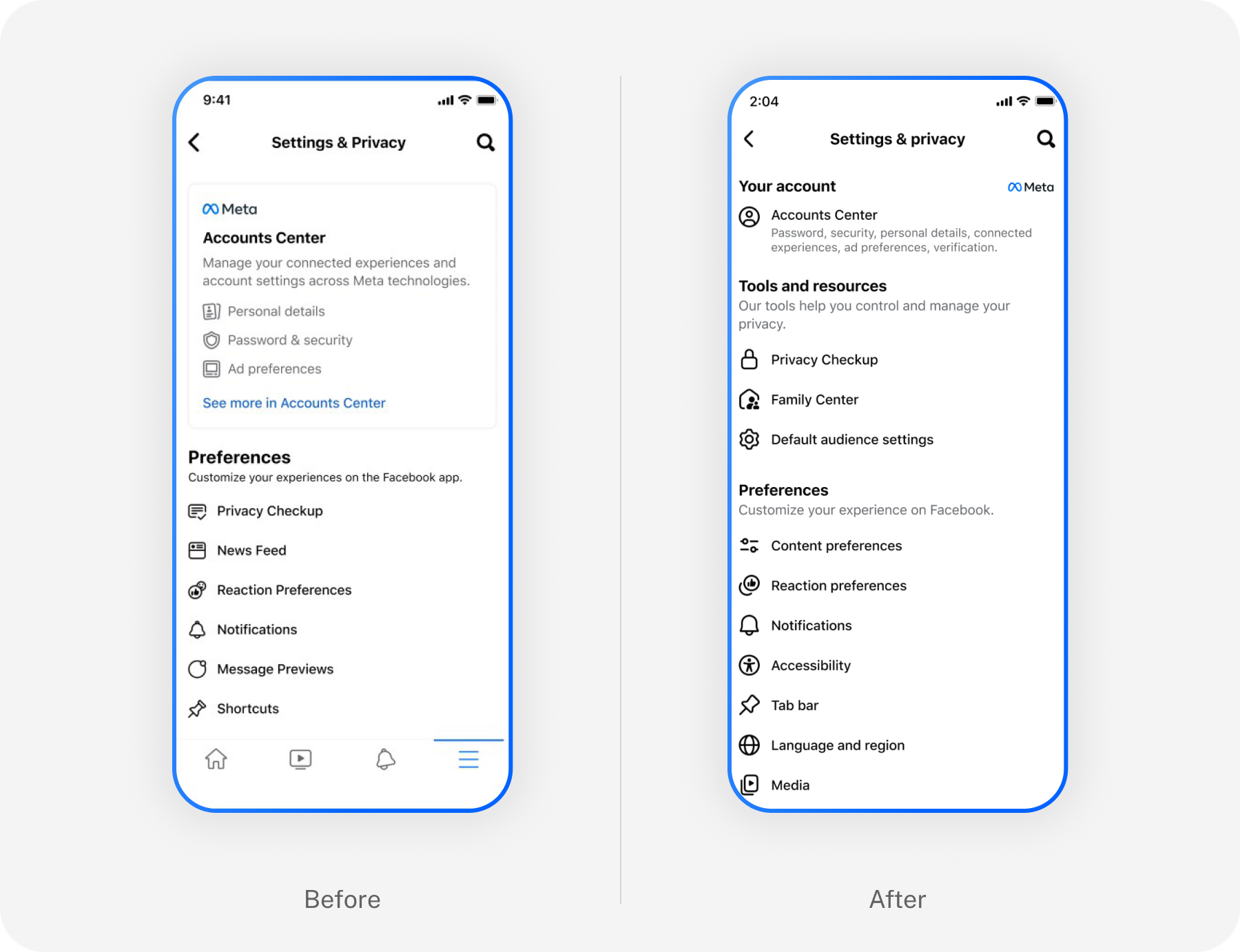
Consolidated central settings and simplified information architecture
In addition to our changes in Feed and other contextual surfaces we heavily consolidated, simplified and flattened our central settings to align them with how users expected them to work.
This made it easier for people to take proactive action if they were facing a repeated or pervasive issue that couldn’t be easily addressed by taking contextual actions on individual pieces of content.
Outcomes and impact
Our work resulted in the creation of a net-new product team to own the controls system in perpetuity. They began rolling out the simplified suite of experiences, deprecating duplicative or non-performant controls, and unifying signals in 2024 and the work continues to be improved upon to this day.
Feed Satisfaction

Work led to multiple YoY increases in multiple top-line metrics measuring content relevance, engagement and user satisfaction
Smaller catalog
60%
Work reduced duplication and fragmentation of control features by 60% or more app-wide and parallel consolidation of back-end systems led to stat-sig reductions in compute costs
System utilizations
300+
The new controls product team utilized our documentation and governance models to review and ensure system scalability for more than 300 proposals over 2.5 years.
Read more