 2018-19
Helped people follow their favorite Overwatch League teams
Launched in December 2017, Overwatch League (OWL) was a first-of-its-kind esports league seeking to marry the world of competitive gaming with tried and true paradigms of traditional professional sports leagues.
The challenge
A key pillar of the OWL retention strategy was content engagement. Fans who watched videos and read articles outside of viewing matches retained at a much higher rate than fans who view matches only.
Unfortunately, while OWL was producing and distributing a high quality and quantity of content, fans were either unaware of it, or uninterested in the seemingly sparse pieces encountered.
My Role
In early 2018 I joined the team full-time as the lead designer for the product to work alongside product and tech to define a retention-focused strategy for the app ahead Overwatch League’s sophomore season.
Contributions
-
 Carried out a competitive audit and secured UXR funding app performance and gain understanding of user expectations and current gaps in the product and defined key heuristics to uphold quality and guide strategy.
-
Translated the outputs of these analysis into a holistic mobile strategy for the league and successfully gained buy in from leadership to pivot the app’s focus from match reminders and live streams to non-match content-based retention.
-
Partnered with product one defining MVP scope, north star and a 12-month roadmap, securing necessary alignment and resource allocations from partner teams.
-
Stood up a 0-1 design system to lower eng overhead, improve accessibility and speed up design iterations, and took multiple features from concept to implementation-read specs for engineering handoff.
What we Shipped
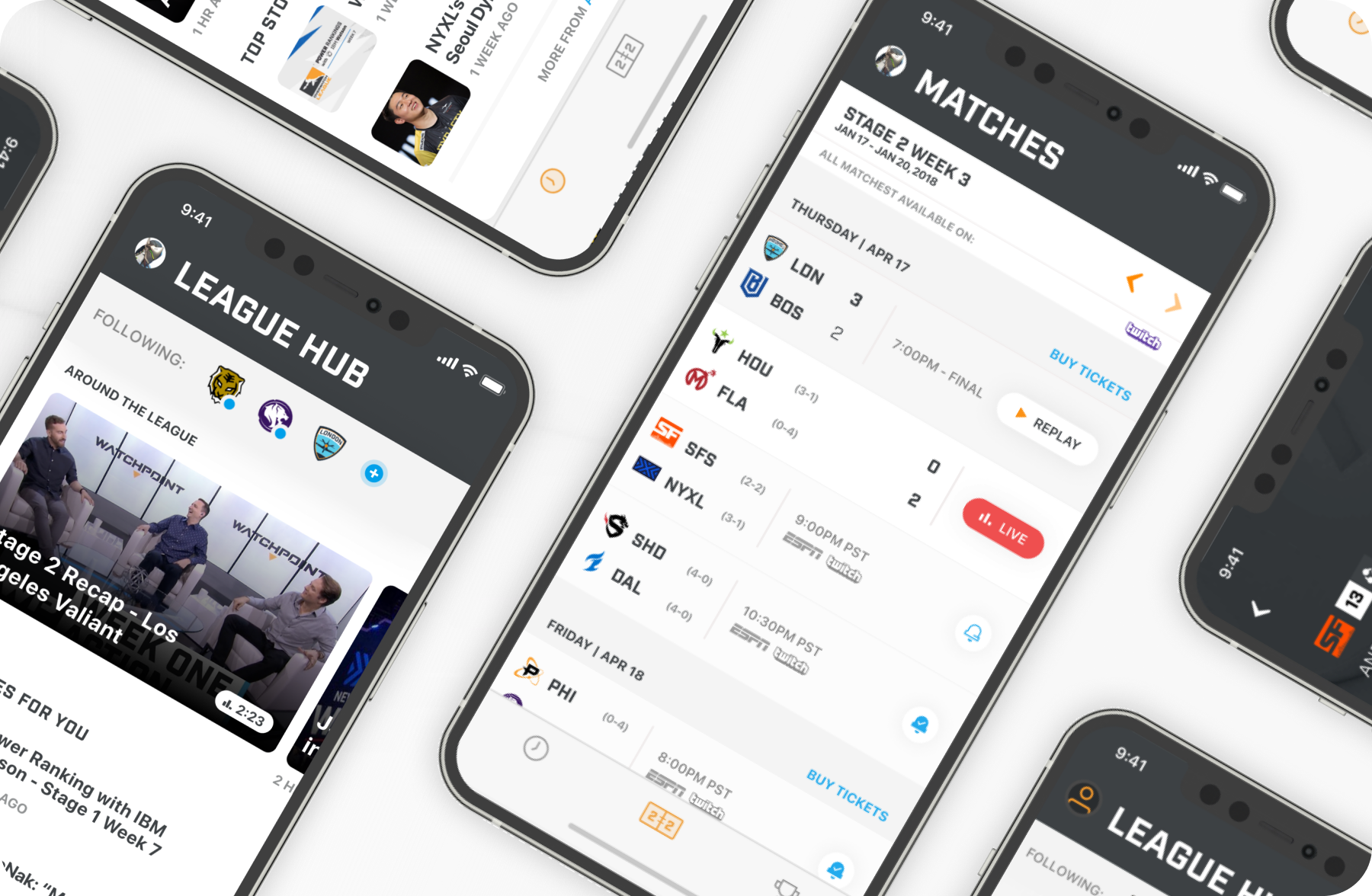
Content-first home feed
The corner stone of the new strategy was delivering people content about their favorite teams outside of their matches. To achieve this we rearchitected the app around delivering this content.
Immersive Video Player
Much of OWL’s content was short-form, and people consumed it as such, specifically the tendency was to play a high volume of videos but not finish many. To account for this we built an immersive video player that allowed fans to easily scroll through content in a single feed once they entered th players.
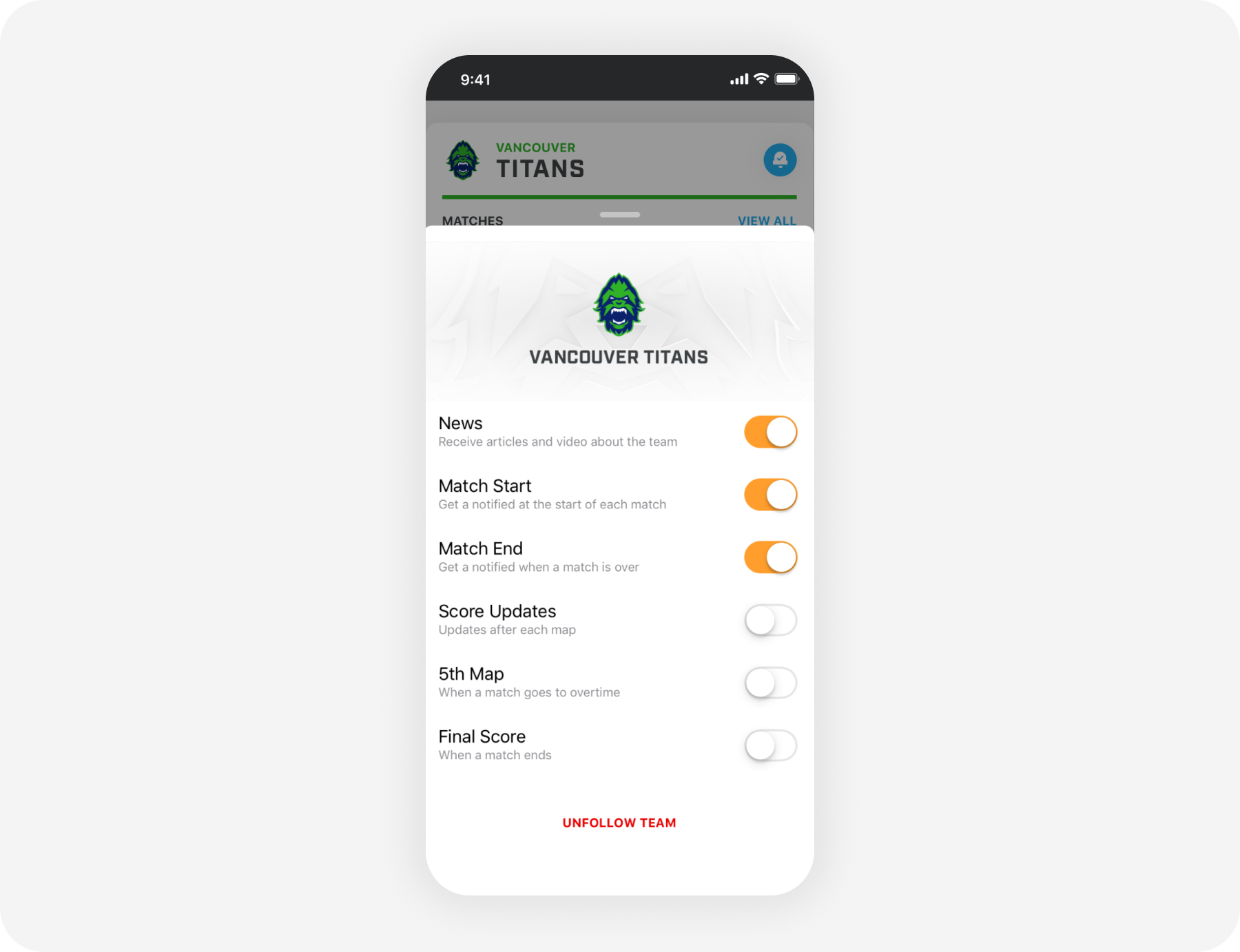
Follow your favorite teams
People rooted for teams for a multitude of reasons. Some because a team represented their home city, others because thier favorite streamer was on the roster. Regardless of their reasons, we made it easier for people to stay up-to-date on whoever they were rooting for.
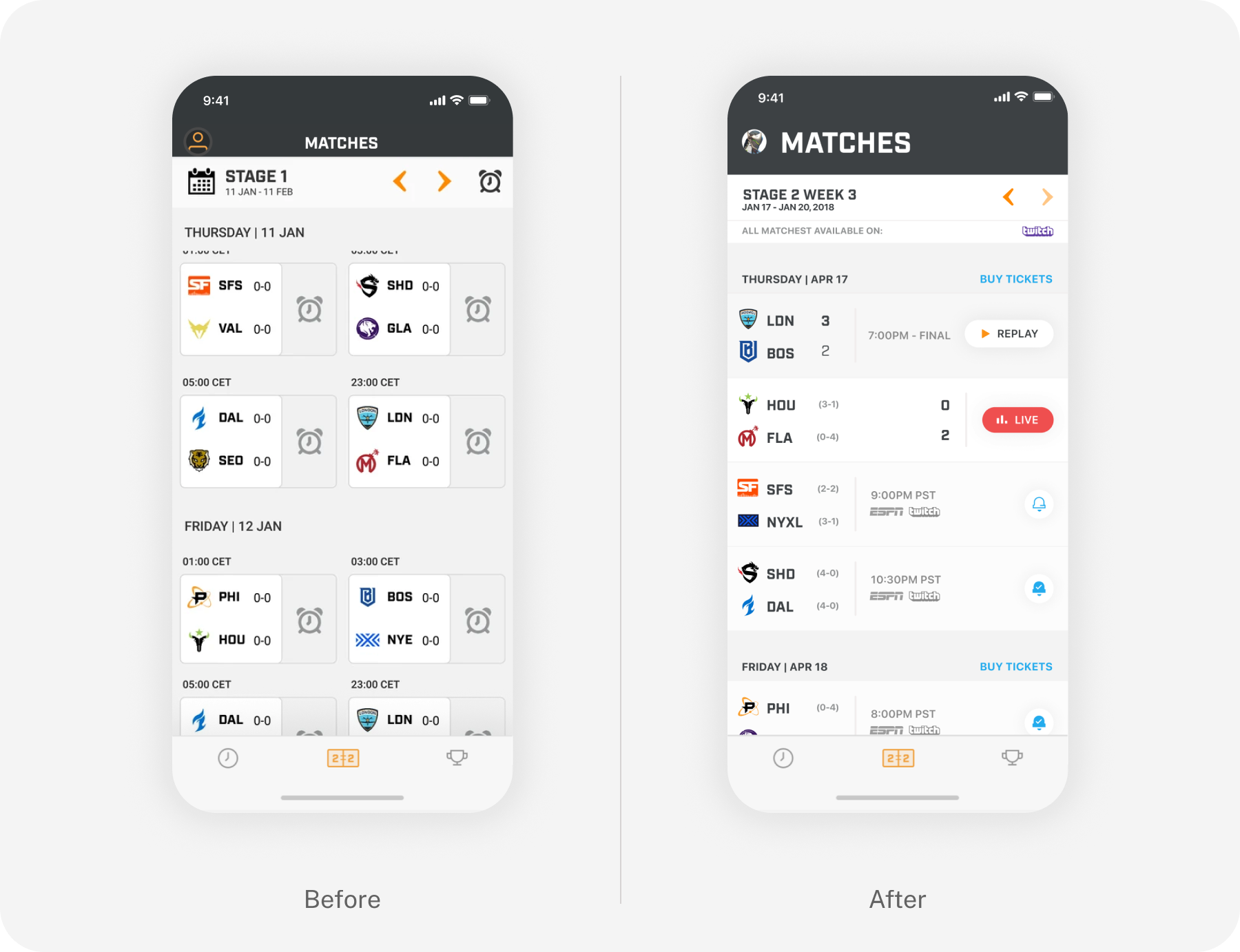
Redesigned Schedule
While our focus was on off-day content and retention we did allocate some capacity to ensure that when matches were happening people knew it and where/how to watch.
To that end we made several macro and micro improvements to the schedule UI over the course of the year to make it easier for people to find out when their favorite teams were playing, know where to watch matches and set match reminders.
Outcomes and impact
Over the course of the OWL sophomore season the team’s work helped exponentially increase engagement and retention for the league’s game broadcasts, culminating in significant YoY gains for season 2. While I can’t share specific numbers due to some papers I signed but didn’t read.
Retention Driver
App users became the highest retained audience for week-over-week match viewership.
Video ROI
We exponentially increased the ROI on non-match content for the league, which led to a content strategy pivot to short-form content for the league overall.